Red Wine Sangría (Spanish)
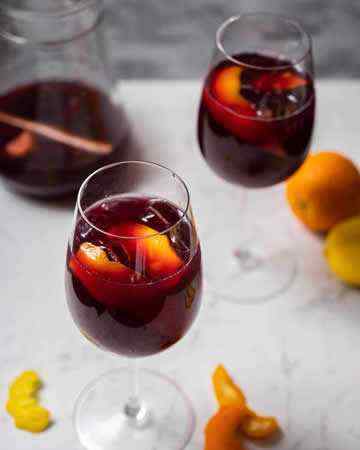 According to European legislation, sangría, which should have anywhere from 4.5-12% alcohol per volume, is made with red wine, citrus fruits, the juice of such fruits, a sweetener, usually sugar, and carbonated water. However, depending on the additional ingredients, sangrías differ not only from region to region but from household to household. If white wine is used instead of the traditional red, we are talking of sangría blanca, while in Catalonia they use a type of sparkling wine called Cava. There is also a special kind of sangría from Asturias which is made with their local cider. Spices such as cinnamon and ginger may be included, but also various fruits like peaches, apples, strawberries, pineapple, mango, and even bananas. Carbonated water may be replaced with either orange, lemon, or lemon-lime soft drink, while honey or sugar syrup can be used instead of sugar. Brandy and other spirits and flavored liqueurs can also be added. The preparation starts with washing and dicing the fruits which are then mixed in a large pitcher with sugar. The wine is then poured in, and the pitcher is covered with plastic wrap and refrigerated for no more than 3 hours. Carbonated water is added just before serving, so the bubbles do not evaporate. Sangría is served over ice, which for easier handling is often divided between individual glasses, instead of added to the pitcher. This queen of holiday drinks is usually served in the summer, but you can also find it year-round in the eastern and southern parts of Spain.
Named after the Spanish sangre, meaning blood, sangría is a drink that can be traced back to Andalusia around 200 B.C. The Romans of the area used to drink hippocras; a beverage made with wine, sugar, and spices. However, because of the rule of the Islamic Moors over the Iberian Peninsula, hippocras went missing from the area for nearly 800 years. During the 17th and the 18th century it became especially popular in France and England, and later also became a favorite of the Spanish high society of the 19th century. Since 2014, the European Union has restricted the use of the word sangría, meaning that only bottles produced in Spain or Portugal can be sold under that name.
1.5 bottles young red table wine (1.125 L)
2 oranges
1 lemon
1 stick cinnamon
3 Tbsp. sugar (optional)
1 green apple (optional)
2 peaches or apricots (optional)
carbonated beverage lemon soda, orange soda, or soda water (optional)
2 oz brandy or vermouth (optional)
If using the sugar (which will make a sweeter sangria than if you omit), dissolve the sugar in two Tbsp. of water over a low flame to create a clear simple syrup. This process will incorporate the sugar better. Let cool.
Wash the oranges and cut off thick pieces of rind before juicing the oranges. Juice the oranges.
Wash the lemon and cut off pieces of rind before juicing the lemon. Juice the lemon.
In a large pitcher or bowl, stir together the wine, simple syrup, orange juice, lemon juice, and brandy (if using), and add in the pieces of lemon and orange rind. If making a truly traditional Spanish sangria, simply add the cinnamon stick and let sit at least two hours (preferably overnight) before serving over ice. This allows the sangria to take on the aromas of the fruit rind and cinnamon stick.
If you want to make a slightly more modern version (still not anything too crazy.) add in chopped up chunks of green apple and peach. For the modern version you can also top off with a carbonated beverage (lemon soda, orange soda, or soda water) right before serving for some bubbles.
Makes 6 servings.
Cook's Notes:
- Red Wine: The traditional wine of choice is usually made from Tempranillo or Garnacha grapes, but any other medium-bodied, dry wine will do. I like to use a decent young and fruity table wine - something you would definitely drink on its own, but one that isn't too complex (or expensive). It's important that it's good quality, and also important that it isn't overly oaky in flavour. That's why a fruity young red wine works best. You can, of course, sub other wines - but then it becomes a different sangria.
- Fruit: The most common fruit you see in red sangria in Spain is by far citrus fruit. Lemon and orange are key ingredients in the majority of Spanish sangrias. Other fruits you may see (and are optional) are peach or apricot and green apple.
- Spices: Usually traditional sangria recipes keep it simple and stick to a flavourful stick of cinnamon. But you can add star anise, nutmeg, ginger, cloves, the options for experimentation are endless.
- Sugar: Again - totally optional. Taste it without sugar and if you need it to be a bit sweeter, add it little by little. I prefer adding it in the form of simple syrup, as it incorporates better.
- Soda: You guessed it, it's optional. The truly traditional Spanish sangria recipe is actually lacking any carbonation. That's because carbonated drinks weren't even invented when sangria got its start. But if you like the extra fizz, add a bit of soda water or lemon soda to your sangria, right before drinking.
- Extra Alcohol: If you want your sangria to pack more of a punch, add a couple of ounces of Spanish brandy or vermouth. Sangria bars in Spain add vermouth to their sangria jugs.