Bread Machine
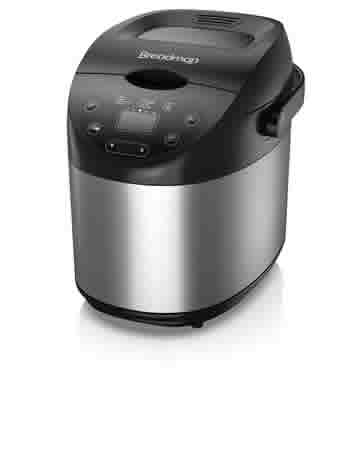 A bread making machine or breadmaker or bread maker is a home appliance for baking bread. It consists of a bread pan (or "tin"), at the bottom of which are one or more built-in paddles, mounted in the center of a small special-purpose oven. The machine is usually controlled by a built-in computer using settings input via a control panel. Most bread machines have different cycles for different kinds of dough - including white bread, whole grain, European-style (sometimes labelled "French"), and dough-only (for hamburger buns and shaped loaves to be baked in a conventional oven). Many also have a timer to allow the bread machine to function without operator input, and some high-end models allow the user to program a custom cycle.
World's first automatic bread-making machine
Although bread machines for mass production had been previously made for industrial use, the first self-contained breadmaker for household use was released in Japan in 1986 by the Matsushita Electric Industrial Co. (now Panasonic) based on research by project engineers and software developer Ikuko Tanaka, who trained with the head baker at Osaka International Hotel to learn how to optimally knead bread; this machine had special ribs inside it.
A decade later the machines had become popular in the United Kingdom, Australia and the United States. While not viable for commercial use due to the fixed loaf shape and the limited duty cycle, bread machines are suitable for home use, producing their best results when dealing with kneaded doughs.