Basil Pesto with Pinenuts, Parmigiano and Pecorino (Italian Pesto alla Genovese)
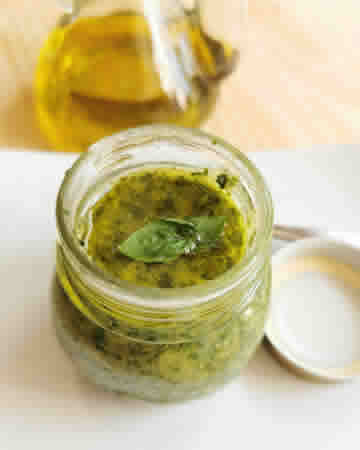 Basil pesto, also known as pesto alla Genovese, is one of the most popular types of pesto. The traditional recipe was developed in the 1800s in Liguria. It is traditionally made by crushing the ingredients together in a marble pestle and mortar. Fresh basil pesto or pesto alla Genovese is probably one of the most well-known Italian pasta sauces. This easy to make cold condiment comes from Liguria where it is served in different pasta recipes. However, nowadays, it is also very popular added to minestrone, pizza, seafood, chicken, rice, salads, vegetables and as a dip or on bread.
Traditional basil pesto has 7 ingredients: fresh basil, garlic, pinenuts, Parmigiano cheese, Pecorino, salt and extra virgin olive oil. In Liguria, they actually have an official recipe published by the Genoa Chamber of Commerce. This calls for Ligurian basil leaves, Vessalico garlic, Mediterranean pinenuts, Ligurian extra-virgin olive oil, coarse sea salt and both aged Parmigiano and Pecorino from Sardinia. Of course, those exact ingredients aren’t easy to find so, most people use locally bought or cultivated basil leaves, pinenuts, garlic and extra-virgin olive oil. Both cheeses are also not easy to source. In fact, I often make basil pesto with just Parmigiano Reggiano or I use Pecorino Romano instead of Sardinian pecorino. They are pretty similar anyway as Pecorino Romano is actually made in Sardinia.
Italians traditionally serve pesto with pasta and there’s more than one recipe for that. For example, they use it in lasagna, they add it to minestrone, they mix it with tomatoes or fresh tuna, and they add green beans and potatoes to their pasta with pesto. Below you’ll find links to some of the different traditional pasta with pesto recipes from Liguria.
4 handfuls fresh basil leaves, washed and dried (60-70 g)
0.7 oz pinenuts, toasted (20 g)
2 oz Parmigiano Reggiano, grated (60 g)
1 oz Pecorino Sardo, grated or double Parmigiano (3 oz) if not available or use pecorino Romano (30 g)
1-2 cloves garlic, peeled
½ cup (3.5 oz) extra-virgin olive oil (100 mL)
1-2 pinches coarse sea salt
Using a Food Processor:
Put all the ingredients in the food processor and pulse a few seconds at a time until you have the right consistency. Don’t keep pulsing for too long at once as the blender will heat up and this can spoil the basil. Or, First put the pinenuts and garlic in the food processor, then pulse until minced. Second add some basil and a little olive oil, then make a few short pulses. Add more fresh basil and a little olive oil, then make a few more short pulses. Repeat if you have more basil leaves. Finally, some salt and the cheese and some more olive oil followed by a short pulse or two just to mix the cheese and olive oil in. Alternatively transfer the pesto to a bowl and add the cheese and more oil then.
Traditional Method:
Put the peeled garlic cloves into a mortar with the pine nuts. Grind until you have a paste. Then add some basil leaves, and a little coarse salt and 3 Tbsp. of olive oil. Keep working with the pestle, while continuing to add more basil leaves and olive oil until the pesto is smooth. Finally, transfer to a bowl, add the grated cheeses and stir well.
Makes 4 servings.
Cook's Notes:
- You can serve your homemade basil pesto Genovese simply mixed into your favourite pasta cooked al dente with a little pasta cooking water or check out the 21 traditional and non-traditional ways to use pesto below for other ideas.
- Homemade pesto can be stored in sterilized mason jars or airtight container in the fridge for up to a week or in the freezer for up to 9 months. Alternatively freeze it in an ice tray and then transfer the 'cubes' to a freezer bag. This way it should last about 6 months.
Nutritional Information:
Per serving: Calories: 328kcal | Carbohydrates: 2g | Protein: 9g | Fat: 32g | Saturated Fat: 7g | Polyunsaturated Fat: 4g | Monounsaturated Fat: 19g | Cholesterol: 18mg | Sodium: 428mg | Potassium: 98mg | Fiber: 0.4g | Sugar: 0.4g | Vitamin A: 941IU | Vitamin C: 3mg | Calcium: 286mg | Iron: 1mg