Sun-Dried Tomato Pesto (Italian)
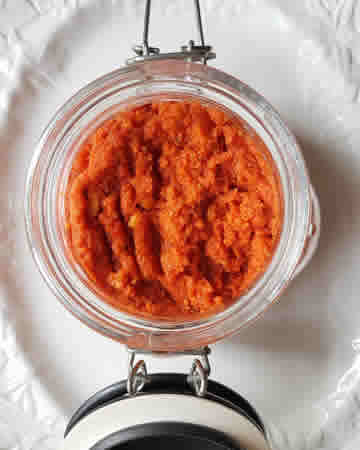 This recipe showcases Sicilian sun-dried tomato pesto, a typical recipe in Sicily. The pesto features sun-dried tomatoes. These provide an intense flavour, enhanced by the addition of garlic, Pecorino cheese, olive oil, pinenuts and almonds. This is a very popular and versatile recipe, often paired with foods such as pizza, bread and pasta. However, if you want it served how it is traditionally done in Sicily, pair it with spaccatelle pasta. This fresh and tasty contemporary Italian mint pesto recipe is easy to make and perfect for summer meals. Serve it with pasta, on bruschetta or as a dip. Also delicious with fish.
14 oz linguine or spaghetti
1 handful fresh mint leaves
1 handful fresh basil leaves
1¾ oz Parmigiano Reggiano freshly grated
1 handful pinenuts
extra-virgin olive oil
Ricotta Cream:
7 oz fresh ricotta
Rinse the mint and basil leaves and pat them dry with kitchen paper.
In a blender or food processor, add the mint leaves, basil leaves, pinenuts, grated Parmigiano Reggiano and a pinch of salt. Start blending, gradually adding olive oil until the pesto reaches a smooth consistency. It's better to blend using short pulses to prevent the blender blades from heating up and spoiling the basil and mint.
Cook the pasta al dente according to the package instructions. Before draining, reserve about a cup of the pasta cooking water.
Place ricotta in a bowl and mix with a little pasta cooking water until creamy and set to the side.
In a large bowl, mix the drained pasta with the mint pesto. Adjust the consistency with reserved pasta water as needed.
Place some creamed ricotta on the bottom of each person’s bowl (bowls are better than flat plates) and place some pasta with mint pesto on top. Serve garnished with additional mint leaves and extra grated Parmigiano Reggiano if desired.
Makes 4 servings.
Cook’s Notes:
- To make this recipe vegetarian, use a vegetarian hard cheese or parmesan. Italian Parmigiano Reggiano is made with animal rennet.
- To make this recipe gluten free, use a gluten free pasta.
- Mint pesto can also be enjoyed as a dip or a sauce with seafood or meat.
- Use Fresh Ingredients: Fresh mint and basil leaves and high-quality Parmesan cheese like Parmigiano Reggiano will make a big difference in flavour. Ensure your mint and basil leaves are vibrant and free from blemishes.
- Grate Your Cheese: Freshly grated Parmigiano Reggiano will meld better into the pesto and provide a smoother texture compared to pre-grated cheese.
Storage and Leftovers:
- Allow any leftovers to cool to room temperature before transferring them into an airtight container. Store in the refrigerator for up to three days.
- To reheat, place the mint pesto pasta in a microwave-safe container and cover it. Heat on medium power for two minutes, then stir the pasta to distribute the heat evenly. Continue to heat in 30-60 second intervals, stirring between each, until the pasta is hot throughout.
- Alternatively, this dish can be enjoyed cold from the refrigerator.
Frequently Asked Questions:
- Will the mint flavour in the pesto be overpowering? Surprisingly, the mint flavour isn't overpowering at all. The addition of ricotta cream also balances the pesto, providing a subtle creamy flavour that complements the fresh mint.
- Can I make the mint pesto ahead of time? Yes, you can certainly prepare the mint pesto in advance. It can keep in refrigerator for up to 5 days and can even be frozen for longer storage.
- Can I use the mint pesto for other dishes? Absolutely. Mint pesto can be used in many of the same dishes as other types of pesto. You can use it as a dip or on bruschetta. A traditional alternative used in Italy with mint pesto is a mint pesto potato salad.
- Is this pesto vegetarian? If you replace the Italian Parmigiano Reggiano with a vegetarian cheese, then this pesto is vegetarian. Italian Parmigiano is made with animal rennet. So, it isn't suitable for vegetarians.