Browned Butter Cake (French Gâteau Magique)
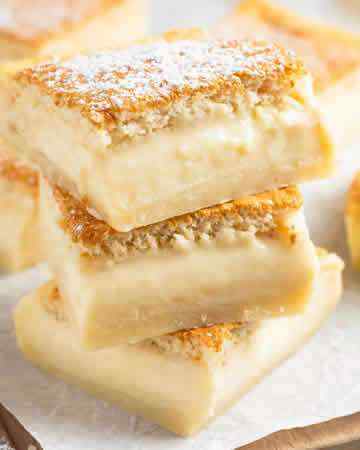 Gâteau Magique literally translated to magic cake is a delicious French cake that originates from Southwestern France. With a thin batter similar to that of crêpes, clafoutis, or far Breton, its origins are not that surprising. During baking, its seven-ingredient batter separates into three layers: a firm, flan-like bottom, a creamy, pudding-like center and a puffy, souffléed crown. This version gets notes of butterscotch from brown sugar and browned butter. Be sure the eggs and milk are at room temperature before mixing. If the batter is cool, it won’t separate as it cooks and the cake will be underrisen. Cool completely before slicing. Refrigerate leftovers for a day or so, but bring to room temperature and dust with confectioners' sugar before serving.
½ cup (8 Tbsp.) salted butter, cut into a few chunks (113 g)
4 large eggs, room temperature, separated
¾ cup light brown sugar, packed (163 g)
2 cups whole milk, room temperature (480 mL)
1 tsp. pure vanilla extract
¾ cup all-purpose flour, unbleached (98 g)
½ tsp. sea salt
Garnish:
confectioners' sugar
Heat the oven to 325°F (165°C/140°C fan, Gas Mark 3) with a rack in the middle position. Mist an 8" square metal baking pan or glass baking dish with cooking spray, then line it with a 7x16" sheet of kitchen parchment so the ends overhang the pan. Mist the parchment with cooking spray.
In a 10" skillet over medium, cook the butter, occasionally swirling the pan, until the milk solids at the bottom are deeply browned and the butter has a rich, nutty aroma, 4-6 minutes. Transfer to a small bowl and cool until ready to use. In a small bowl, whisk together the flour and salt.
In a stand mixer with the whisk attachment, beat the egg yolks and sugar on medium-high, scraping the bowl as needed, until the mixture is light, fluffy and doubled in volume, about 5 minutes.
With the mixer running on low, slowly add the browned butter, then mix for 1 minute. With the mixer running, stream in the milk and vanilla; mix for 1 minute. Gradually add the flour, then mix until combined, about 30 seconds. The base will be thin and dotted with beads of flour; this is fine. Detach the bowl. Using the whisk attachment, scrape along the bottom and sides of the bowl to make sure no large pockets of flour remain, then transfer to a large bowl.
Thoroughly wash and dry the mixer bowl and whisk attachment. Add the egg whites to the bowl then whisk on medium until foamy, about 1 minute. Increase to medium-high and whip until the whites hold stiff peaks, 3-5 minutes.
Scrape the egg whites onto the batter, then fold in with a silicone spatula until the whites are broken into lumps about ½" in size; do not over-fold. The whites will not fully incorporate into the batter; the batter will remain fluid, with curd-like lumps of egg white at the surface.
Gently pour the batter into the center of the prepared pan. Bake until puffed and deep golden brown, 45-50 minutes. Cool to room temperature in the pan on a wire rack, at least 2 hours; the cake will deflate slightly and pull away from the sides of the pan as it cools.
Run a thin-bladed knife between the cake and pan to loosen. Using the parchment overhang as handles, lift the cake out of the pan and set it on a cutting board. Slide a thin metal spatula between the cake and parchment, then slide the parchment out from underneath. Cut the cake into pieces. Dust with powdered sugar just before serving.
Makes 10-12 servings.
Variations:
- The mix of textures already makes this cake interesting. But with a simple vanilla base, it’s easy to change up the flavours. Here are some of my favourite flavour variations:
- Chocolate: Whisk ⅓ cup of cocoa powder into the warm milk and butter until dissolved and no lumps remain. Reduce the flour to ½ cup. For a more complex chocolate flavour, add 1 tsp. of instant espresso powder.
- Nutella: Mix ⅓ cup Nutella in the egg yolk mixture before adding the flour.
- Zest: Stir in the zest from 1 lemon or 1 orange.