Chiffon Cake (California)
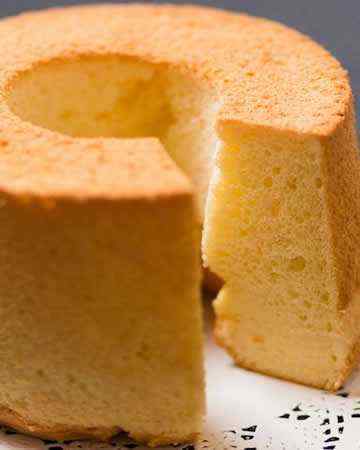 This airy sponge cake was invented in 1927 by Harry Baker, a California insurance salesman-turned-baker. He kept the recipe secret for 20 years until he sold it to the Washburn-Crosby Company, today General Mills, who introduced it in 1948 with a major Betty Crocker marketing blitz, publishing a set of 14 different recipe variations. Chiffon was advertised as "the first really new cake in a hundred years," thanks to its "secret ingredient" - the recipe used vegetable oil instead of conventional shortening which made chiffon cake light and fluffy like angel food cake, yet rich and moist like classic butter cakes. By the end of the 1950s, chiffon became a nationwide sensation. Apart from the basic recipe, variations included fruits like lemon, oranges, and pineapple, but also chocolate, walnut, maple nut, pumpkin, and allspice. Chiffon cake remains equally popular even today, and in the United States, March 29 is celebrated as the National Lemon Chiffon Cake Day.
2¼ cups all-purpose flour, unbleached
1½ cups sugar
3 tsp. baking powder
1 tsp. kosher salt
½ cup vegetable oil
5 medium-sized egg yolks, unbeaten
¾ cup cold water
2 tsp. pure vanilla extract
1 lemon, freshly zested
7-8 egg whites
½ tsp. cream of tartar
Preheat oven to 325°F (160°C/140°C fan, Gas Mark 2).
Sift the dry ingredients - flour, sugar, baking powder and salt - into a mixing bowl, and make a well in the center.
One by one, add the wet ingredients - oil, egg yolks, water, vanilla and lemon rind. Mix with wooden spoon until the batter is completely smooth.
In another bowl, whip the egg whites and cream of tartar until stiff peaks are formed.
Gently fold the whipped egg whites into the batter until blended with a rubber scraper or a heavy spoon.
Transfer the mixture into an ungreased baking pan. If you use a 10" long and 4" deep tube, bake for 55 minutes.
Increase the temperature to 350°F (175°C/155°C fan, Gas Mark 3) and bake for 10-15 more minutes. If you prepare the chiffon cake in a 2" deep, 9 per 13" oblong pan, bake for 45-50 minutes on 350°F (175°C/155°C fan, Gas Mark 3). When the cake becomes spongy, it is done.
Turn the pan upside down, leave the cake to cool and gently remove from pan.
Cooks Notes:
- Oil: Not every vegetable oil is perfect for a sponge cake. Canola and sunflower oil work best, as well as almond and walnut oil. If you are into experimenting, you may even try olive oil, but choose the sweeter-tasting varieties.
- Baking: Since chiffon cake needs to turn out spongy and humid, respecting the recommended baking temperature (325-350˚F) is essential. Bake it on a medium- or lower-placed oven rack and, if possible, use an oven thermometer to make sure the temperature is right. Due to a relatively high content of oil in the batter, it is not necessary to oil or butter the pan before baking.
- Eggs: Precision is key to a successful dessert making, and when it comes to eggs, they can vary a lot in size. Most American recipes are adjusted for large (2 oz) eggs. Eggs should be as fresh as possible and warmed to room temperature. Before beating the egg whites, make sure that there isn't a single drop of egg yolk left behind since it will ruin the egg white snow. Also, it is advised to avoid making chiffon cake or any other similar, meringue-based cakes on especially humid days, because the egg whites are sensitive to humidity.