Gruyère Puffs (French Gougères)
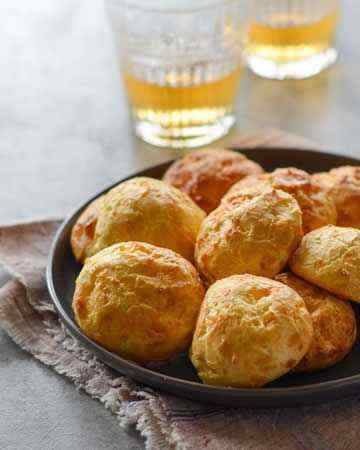 Gougère would be the descendant of a pastry of the seventeenth century, the ramequin of Burgundy, which achieved national prominence in the nineteenth century. The current recipe for gougère dates from the first half of the twentieth century. Originally crown-shaped puff pastry embellished with cheese, it is now rather a small individual cake. It is also widespread in neighboring Champagne (Aube). The history of gougère remains uncertain. It would be a Parisian pastry chef, named Henard, established in Flogny-la-Chapelle, who would have amended the ramequin of Paris, very popular in the late eighteenth century, to create gougères. If we ignore the exact origin of the gougère, we know, like everyone else, that it is the queen of savoury pastry appetizers in Burgundy, and goes perfectly with the wines of the region. Gougère, the choux pastry, is a highlight of the region. These little airy cheese-filled pastry bites make the perfect hors d’oeuvres for a wine tasting party but also, because they are so easy to make, a great and tasty "anytime" snack. As for wine pairing, they go with pretty much anything. If you’d like to be authentic, stick to the french wines, from Champagne to any Burgundian white wine.
½ cup water (125 mL)
3 Tbsp. butter, salted or unsalted, cut into cubes (40 g)
¼ tsp. sea salt
black pepper, freshly ground
½ cup all-purpose flour, unbleached (70 g)
2 large eggs
2 tsp. chives or thyme, minced
¾ cup Gruyère cheese, grated (3 oz, 90 g)
Preheat the oven to 425°F (220°C). Line a baking sheet with parchment paper or a silicone baking mat.
Heat the water, butter, salt, and pepper in a saucepan until the butter is melted.
Dump in the flour all at once and stir vigorously until the mixture pulls away from the sides into a smooth ball. Remove from heat and let rest two minutes, to cool it down a bit. At this point, you can scrape the dough into the bowl of a stand mixer fitted with the paddle attachment. If you don’t have a mixer, let it cool in the pan, stirring it a few times to let the heat escape.
Add the eggs, one at a time, stirring quickly to make sure the eggs don’t ‘cook.’ The batter will first appear lumpy, but after a minute or so, it will smooth out.
Add about ¾ of the grated cheese and the chives, and stir until well-mixed.
Scrape the mixture into a pastry bag fitted with a wide plain tip and pipe the dough into mounds, evenly-spaced apart, making each about the size of a small cherry tomato.
Top each puff with a bit of the remaining cheese, then put the baking sheet in the oven.
Bake for 5 minutes, then turn the oven down to 375°F (190°C) and bake for an additional 20-25 minutes, until they’re completely golden brown.
Makes about 30 mini puffs.
Cook's Notes:
Two things to keep in mind when making these. One is that you should have all the ingredients ready to go before you start. Don’t let the water and butter boil away while you grate the cheese. Otherwise you’ll lose too much of the water. Second is to let the batter cool for a few minutes before adding the eggs so you don’t ‘cook’ them. When you stir in the eggs that you do it vigorously, and without stopping. I’m not a fan of extra dishes to wash, but a stand mixer is the best way to mix the eggs in quickly.Use a strong cheese, such as Gruyère, aged Comte, sharp cheddar, or a mix of cheeses. Adding some smoked cheese to the mix is nice also. If you don’t have a pastry bag with a plain tip, you can put the dough into a freezer bag, snip off a corner, and use that. Or simply use two spoons to portion and drop the dough onto the baking sheet. This recipe can easily be doubled if you want to make larger cheese puffs.
For extra-crispy puffs, five minutes before they’re done, poke the side of each puff with a sharp knife to release the steam, and return to the oven to finish baking. Serving: The puffs are best served warm, and if making them in advance, you can simply pipe the gougeres on baking sheets and cook right before your guests arrive, or reheat the baked cheese puffs in a low oven for 5-10 minutes before serving. Some folks like to fill them, or split them and sandwich a slice or dry-aged ham in there, although I prefer them just as they are. A bit of troubleshooting: The most common problem folks have with pate a choux, or cream puff dough, is deflated puffs. The usual causes are too much liquid (eggs), or under baking. Make sure to use large eggs, not extra-large or jumbo, and use a dry, aged cheese, if possible. And bake the puffs until they’re completely browned up the sides so they don’t sink when cooling. If yours do deflate, that’s fine.