Duck
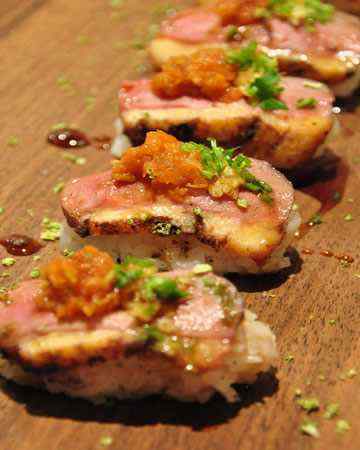 Wild duck is considered game meat, while farmed ducks are not. The flavour difference between these two categories is significant because of the poultry's diet. Farmed ducks are fed a diet of corn and soybeans and get considerably less activity than their flying, migrating and constantly moving cousins. As a result, farmed duck meat is fattier and more tender than wild duck. Wild duck is much tougher, depending on the bird's age and more flavourful, depending on its diet before slaughter.
You can prepare wild duck the same way as a farmed duck. Popular cooking methods include roasting the whole bird, making a confit with the legs, or cooking the breasts separately. The size of the bird means that the breasts will cook at a different rate than the legs. The website recommends roasting the Mallard - one of the most common types of wild duck eaten - by removing the legs when the breast is done, so that you can pop them back into the oven to crisp up while the breast rests.
Ducks have many economic uses, being farmed for their meat, eggs, feathers, (particularly their down). They are also kept and bred by aviculturists and often displayed in zoos. Almost all the varieties of domestic ducks are descended from the Mallard (Anas platyrhynchos), apart from the Muscovy Duck (Cairina moschata).
In many areas, wild ducks of various species (including ducks farmed and released into the wild) are hunted for food or sport, by shooting, or formerly by decoys. Because an idle floating duck or a duck squatting on land cannot react to fly or move quickly, "a sitting duck" has come to mean "an easy target".