Pasta al Pomodoro (Italian Tomato and Parmesan)
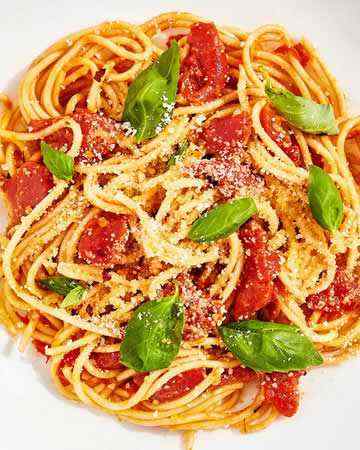 Pasta al pomodoro - pasta with tomato sauce - is the most classic of all Italian first courses. It’s a dish that’s more than a symbol of Italian cuisine - it’s part of the national identity. And it has achieved this status in a relatively short time. Tomato was in fact introduced as a condiment for pasta only at the beginning of the 19th century. Up until then, pasta was eaten plain, or only with the addition of cheese. Tomato was introduced to Europe by the Spanish conquistadores who imported it from Central and South America; in Mediterranean countries, tomato found an ideal habitat to grow. Originally, though, it was used in Italy only as an ornamental plant. In 1778, the chef and author Vincenzo Corrado, in his book ‘Cuoco galante,’ (The Chivalrous Cook) mentions for the first time the ‘salsa al pomodoro’, but it will still be some time before it is used as a sauce for pasta. It was Neapolitan street sellers who, at the beginning of the 1800s, started using ‘a pummarola’ (tomato sauce in Neapolitan dialect) to accompany maccheroni. The dish got an official recognition in 1837, when chef and author Ippolito Cavalcanti published the first recipe for ‘vermicelli al pomodoro’ (vermicelli are similar to spaghetti); by the end of that century, pasta al pomodoro had become popular all over Italy, and, through the Italian mass migration of that time, it would quickly be exported beyond national borders.
Nothing says “baby’s first Italian dinner” quite like mediocre marinara sauce dumped over clumpy noodles. At its simplest a pomodoro sauce recipe requires olive oil and good-quality canned tomatoes (we like Muir Glen, but if you opt for pricier San Marzano tomatoes, be sure to look for the DOP designation on the can). Our version adds garlic, Parmesan cheese, lots of fresh basil and butter for that glossy finish. The result is an Italian tomato sauce that’s brighter, with more vibrant acidity than you might expect from something like a marinara (which often includes oregano, red wine and extra spices). Here we pair the sauce with spaghetti, but you can use this simple recipe with any of your favourite pasta shapes - or layer it into a lasagna or chicken Parmesan, deploy it as a homemade pizza sauce, slide it next to a pile of mozzarella sticks, or slather it on a meatball hoagie.
3 Tbsp. Diamond Crystal or 1¾ Tbsp. Morton kosher salt
1 (28 oz) can whole peeled tomatoes
4 garlic cloves
3 Tbsp. extra-virgin olive oil
1 pinch crushed red pepper flakes
3 basil sprigs
1 lb spaghetti or other dried pasta
4½ oz. Parmesan cheese, finely grated on the small holes of a box grater or in a food processor or blender, divided (~ 1 cup)
2 Tbsp. unsalted butter
Garnish:
fresh basil leaves
extra-virgin olive oil
crushed red pepper flakes
Fill a large stock pot two thirds full with water and place over high heat to bring to a boil. Once you start to see steam, add 3 Tbsp. Diamond Crystal or 1¾ Tbsp. Morton kosher salt. We know, we know: That looks like a LOT of salt. But salting the pasta water aggressively - it should almost be seawater-salty - is the key to making sure every noodle is properly seasoned. It’s the main reason restaurant pasta tastes better than the stuff you usually make. While you wait for the water to boil, start your sauce.
Open a 28 oz can of whole peeled tomatoes and drain contents in a colander set over a medium bowl. Using clean fingers, poke a hole in the tomatoes and shake to drain liquid and seeds from the insides of each tomato, reserving liquid. Shake colander over bowl to separate the solids from all the juices and encourage liquid to drain; set aside, reserving juices.
Smash 4 garlic cloves with the flat side of a chef’s knife forcefully, breaking garlic into smaller bits; remove skins.
Working next to your pasta pot, warm 3 Tbsp. extra-virgin olive oil in a large Dutch oven over medium heat. Add garlic and cook, stirring often with a wooden spoon, until garlic is golden all over, about 3 minutes.
Stir in a pinch of red pepper flakes, then add drained tomato solids and increase heat to medium-high. The idea here is to concentrate the flavour of the solids before adding the tomato juices, which will give your sauce a more complex, rounded flavour. Cook, stirring occasionally, until tomatoes are darkened in colour, browned and caramelized in spots and starting to break down, 6–8 minutes. Don’t rush this part. If you aren’t getting colour, let it go for another few minutes. Mash with the back of the wooden spoon to form a coarse paste.
Add reserved tomato liquid to pot and stir to combine. Season with a pinch of kosher salt, throw in 3 basil sprigs, and reduce heat so sauce is bubbling at a simmer. Cook, stirring occasionally, until liquid is reduced and sauce reaches the thickness of applesauce, 8-10 minutes. If your water isn’t boiling yet, turn off heat under sauce while you wait; if it is, reduce sauce to low heat and move on.
Add 1 lb spaghetti or other dried pasta to pot of salted water and agitate with tongs to prevent sticking. Cook pasta, tossing occasionally, just until lower end of time range given on the package for al dente. If you're not sure if it’s done, fish out a piece and take a nibble - it should still be slightly crunchier than you’d like because it's going to continue cooking in the pomodoro sauce. Just before pasta is done, use a heatproof measuring cup to scoop out at least 1 cup pasta cooking liquid.
Using tongs, transfer pasta from stock pot to Dutch oven with sauce, allowing water to piggyback on pasta into sauce. (That’s right, no draining). Crank heat under sauce to medium-high and pour in ½ cup reserved pasta cooking liquid. If you’ve never finished cooking pasta in a pan full of sauce - this process is what ensures that every single noodle is completely coated and infused with saucy goodness and is pretty much the main difference between a dish of “meh” pasta and one that blows your mind.
Cook pasta, tossing constantly, until spaghetti sauce is clinging to each noodle and liquid is mostly absorbed, about 1 minute. You still want a saucy consistency, but not watery. If things start to look a little dry, add another splash of that pasta cooking water; if they look too wet, just keep tossing and stirring to tighten the sauce.
Slowly sprinkle in about ½ cup Parmesan cheese (you want the grainy stuff with the texture of shaky cheese, not Microplaned; if you have a blender or food processor, you can use it to process a block of the good stuff), tossing constantly, until it has melted into the sauce. Add more pasta water, a couple of tablespoons at a time, to loosen sauce if necessary - it should be plenty saucy while you’re incorporating the cheese so it emulsifies into the sauce properly. You want the sauce to ooze but still be thick enough to coat the pasta.
Remove pot from heat and stir in 2 Tbsp. butter until melted. Finishing with a bit of butter is almost always a good idea - it makes the finished pasta dish extra glossy and delicious.
Using tongs, divide pasta among bowls, then top with remaining Parmesan and fresh basil leaves. If you’re feeling fiesty, top with red pepper flakes and an extra drizzle of olive oil. And there you have it: saucy, glossy spaghetti al pomodoro. Give yourself a pat on the back, and kiss the store-bought stuff goodbye.
Makes 4-6 servings.
Cook's Notes:
- Whole peeled tomatoes are the only canned tomatoes worth buying. The diced ones sometimes have weird chemicals added to them to keep the chunks from breaking down.
- If the garlic cloves are really big, you might need to give them an extra whack to make sure they’re broken down. Don’t bother chopping - the garlic will infuse into the oil as it sizzles and break down as the sauce simmers.
- We like using a Dutch oven or a large, high-sided skillet for cooking sauce and finishing pasta; it's kind of the only thing big enough to toss a whole pound of pasta in without noodles flying everywhere.