Pasta Alfredo (Italian-American Cheese and Butter)
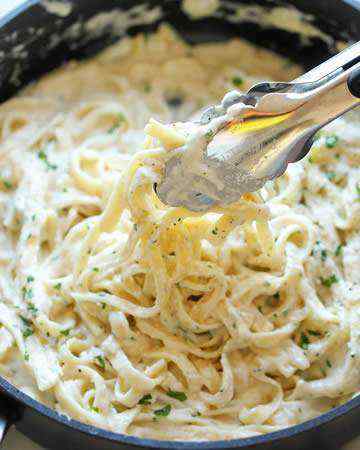
Fettuccine Alfredo has a unique place in the multifaceted world of Italian cookery. The dish is famous in America and hardly known in Italy, but it is actually Italian, not Italian-American, at least originally. Italians refer to the original dish as Pasta Burro. It was invented by Roman restauranteur Alfredo di Lelio, who - the story goes - invented it to suit his pregnant wife who had lost her appetite for most foods. He later introduced the dish, modestly named after himself, into the menu of his restaurant on via della Scofa in 1914. Some years later, in 1920 he famously served it to American film stars Mary Pickford and Douglas Fairbanks, who were visiting Rome on their honeymoon. And the rest, as they say, is history. His fettuccine Alfredo - really just a richer variation on a perfectly everyday dish, fettuccine al burro - became a hit in the States. Lucky Alfredo hit the proverbial jackpot, making oodles of money from his famous noodles as a veritable parade of Hollywood movie stars trapsed through his establishment, along with lots of eager, well-healed tourists. If you want to experience a bit of culinary history, you can visit Alfredo’s restaurant still today - there are actually two now, the second one is via della Scrofa at the piazza Augusto Imperatore (home to the ruins of Emperor Augustus‘ mausoleum and his ‘Altar of Peace’, or Ara Pacis, one of the most intact and, to my mind, most beautiful pieces of Roman architecture still in existence). You can try Alfredo’s famous fettuccine in their birthplace, surrounded by other tourists, if you’re willing to pay the dizzying prices.
In any event, this venerable dish is very simple and easy to make if you have the right ingredients - real, freshly grated Parmigiano-Reggiano cheese, best quality butter and fettuccine, ideally homemade, of course, but good-quality store-bought egg pasta will do just fine as well. It may come as a surprise to some readers, but Alfredo’s original recipe does not call for cream; that was added when the dish crossed the ocean to America. In the original version, the cheese is mixed vigorously with the pasta and a bit of the water in which the pasta is cooked, forming a creamy consistency without the actual cream, sort of like that other Roman pasta dish, cacio e pepe. I like both versions of the dish, but it’s really worth trying the original recipe. It has a purer taste and, if not exactly dietetic, is rather lighter than its American cousin.
Pasta:
1 lb long pasta (spaghetti, fettucine, linguine, etc.)
4 Tbsp. sea salt
Sauce:
½ cup butter
1½ cups heavy whipping cream
2 tsp. garlic, minced
½ tsp. Italian seasoning
½ tsp. kosher salt
¼ tsp. black pepper, freshly cracked
2 cups Parmesan cheese, freshly grated
Garnish:
fresh herbs, chopped
Parmigiano-Reggiano cheese, freshly grated
sea salt
black pepper, freshly cracked
Cook the Pasta:
Place a pot of water on the stove and bring to a boil. When it boils, add salt, wait for it to come back to boil and then add pasta and cook to "al dente" (about 1-2 minutes less than the package directs).
Make the Sauce:
Melt the butter in a skillet over very gentle heat, making sure that the butter just melts without colouring at all. Add the cream and simmer over low heat for 2 minutes.
Whisk in the garlic, Italian seasoning, salt and pepper for one minute.
Whisk in the Parmesan cheese until melted.
Assembly:
Drain and transfer the fettuccine to the skillet. Mix vigorously with a fork and spoon or with some long tongs. It should not be at all watery, but the pasta should be 'loose' and slither around the pan easily.
Season and garnish, as desired. Serve immediately.
Makes 4 servings.
Cook's Notes: Some recipes for fettuccine Alfredo call for making the dish off heat, in a warm bowl, but I like using a skillet. It keeps the pasta warm, and is more forgiving if you happen to add a bit too much pasta water, for example, you can cook it off. It also keeps the pasta nice and hot. But make sure the heat is very gentle, or the sauce will ‘fry’ and lose its creamy texture.