Pasta Pesto alla Genovese (Italian Pesto with Pinenuts)
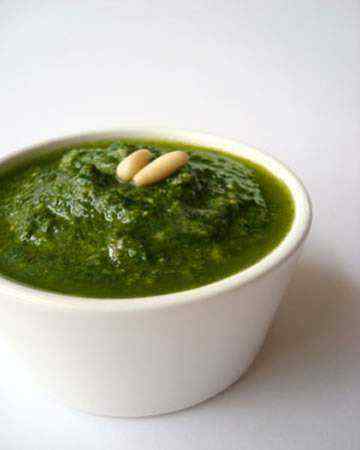 Pesto, or to refer to the original dish pesto alla genovese, is a sauce originating in Genoa, the capital city of Liguria, Italy. It traditionally consists of crushed garlic, European pine nuts, coarse salt, basil leaves, hard cheese such as Parmigiano-Reggiano (also known as Parmesan cheese) or Pecorino Sardo (cheese made from sheep's milk), all blended with olive oil. The name is the past participle of the Genoese verb pestâ (Italian: pestare), which means to pound, to crush, in reference to the original method of preparation: according to tradition, the ingredients are "crushed" or ground in a marble mortar through a circular motion of a wooden pestle. This same Latin root, through Old French, also gave rise to the English noun pestle. Strictly speaking, pesto is a generic term for anything that is made by pounding; that is why the word is used for several pestos in Italy. Nonetheless, pesto alla genovese ("Genoese pesto") remains the most popular pesto in Italy and the rest of the world. An herb-based sauce originating in Italy that is typically made with basil, parsley, pine nuts, garlic, olive oil, and parmesan or Romano cheese. Many variations of this sauce exist, which may be different simply by the type of cheese, nuts or herbs, or other ingredients that are used to make the sauce. As an example, a red coloured version of pesto, known as pesto rosso in Italian, is made with sun-dried tomatoes as one of the key ingredients, in addition to the basil, parsley, garlic, cheese and olive oil. Pesto is traditionally used as a pasta sauce but may be used as a seasoning for other foods as well as an ingredient or topping for appetizers. Pesto sauce is best served with long thin pasta, such as linguine but also goes well with penne or farfalle or even with filled pasta.
Pasta:
1 lb pasta (linguine, penne or farfalle)
4 Tbsp. sea salt
2 cups fresh basil leaves
1 cup extra-virgin olive oil
1 cup Parmesan cheese, grated
2 cloves garlic
½ cup pinenuts or walnuts
½ tsp. sea salt
In a large pot of boiling salted water, cook the pasta until al dente (about 8 minutes).
For the Pesto: Combine all ingredients in a blender or food processor; blend until smooth. Use immediately, or cover and store in the refrigerator until ready to use.
Makes 1½ cups or enough for 4 servings of pasta.
Cook's Note: Fresh pesto can be kept refrigerated for 2-3 days or frozen to be kept for longer periods of time. As the fresh pesto is exposed to air, the outer fringes of the pesto will darken while the inner areas will tend to remain brighter in color. This discoloration of the sauce occurs naturally and is part of the aging process that decreases the full flavor of fresh pesto.