Pasta Pesto alla Trapanese (Italian Pesto with Almonds)
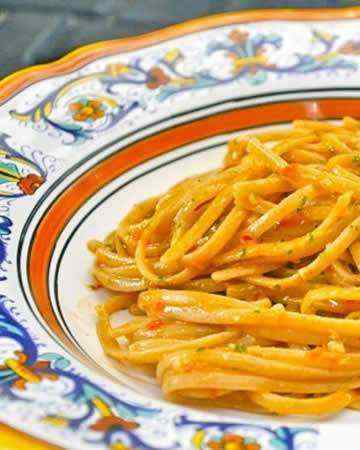 The pesto alla trapanese, is a Sicilian variation of the Genoese pesto, typical of the Province of Trapani. It is also known as pesto alla siciliana, pesto rosso, and as pasta cull'agghia in the Sicilian language. It is made of garlic, basil, almonds, grated pecorino, tomatoes, salt, and pepper, and bound with extra virgin olive oil. The dish was introduced in ancient times by Genoese ships, coming from the East and stopping at the port of Trapani, who brought the tradition of agliata, a sort of pesto sauce based on garlic and walnuts, which was then developed by Trapani sailors with the products of their land, notably tomato and almonds. "Busiati with pesto trapanese" is listed as a traditional Italian food product (P.A.T.) by the Ministry of Agricultural, Food and Forestry Policies.
½ lb ripe fresh tomatoes (400 g)
2-3 cloves garlic
1 handful fresh basil
1 handful blanched almonds
sea salt
black pepper, freshly cracked
extra-virgin olive oil
4 oz pecorino cheese, grated (100 g)
1 lb pasta of your choice (400 g)
Make your pesto by adding tomatoes, garlic, basil, almond, kosher or sea salt black pepper, freshly cracked in the food processor. Process on 'pulse' until the ingredients are well chopped, then with the motor running, add olive oil in a stream until the mixture comes together and forms a smooth sauce. (The almonds should not become completely pulverized, however, but retain some of their crunch.)
Cook your pasta al dente. Drain and pour into a warmed serving bowl. Add your pesto and mix well, then add the cheese and mix again. (If the pasta is a little dry, add some pasta water to loosen it up.)
Serve immediately, perhaps with a dollop of extra pesto on top, and with additional grated cheese in a small bowl for those who want it.
Makes 4 servings.
Cook's Notes: If using mature fresh tomatoes, you should peel them and remove the seeds before adding them to the food processor. Otherwise, your pesto will be too watery and have unpleasant bits of skin in it. Tomatoes are easily peel if the skin is loosened a bit by a quick blanch in boiling water (no more than 30 seconds or so) or by charring the skin over a flame as you would a bell pepper. You can also use small grape or cherry tomatoes, which have tender skins and very little by way of seeds and water inside. They need no particular prep before they are added to the rest of the pesto.