General Tso's Chicken (Chinese)
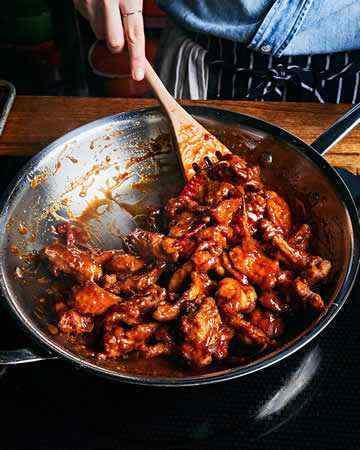 The dish as most Americans know it today was invented by a Hunanese chef named Peng Chang-kuei in the 1950s. Fuchsia Dunlop, the English-language authority on Chinese cuisine, chronicled the chef’s story in her excellent Revolutionary Chinese Cookbook. Peng worked as an official chef for the Nationalist government, and after the Chinese Civil War ended in 1949, defected with his employers to Taiwan. It was there that he created the original version of the now-famous chicken dish and named it after a Hunanese general, Tso Tsung-t’ang (or Zuo Zongtang), who was best-known for putting down a rebellion in the western desert region of Xinjiang in the 19th century. This early iteration of General Tso’s chicken was very much true to Hunan cuisine. Peng described its flavors in Dunlop’s book as "typically Hunanese—heavy, sour, hot, and salty." The dish had none of its current characteristic sweetness until the 1970s, when Peng began serving a Westernized version at his eponymous restaurant Peng’s in New York City. "The original General Tso’s chicken was Hunanese in taste and made without sugar," Peng explained, "but when I began cooking for non-Hunanese people in the United States, I altered the recipe." The chile-laced sweet-and-sour sauce that resulted helped put General Tso’s chicken on the map.
1½ lb chicken thighs, boneless, skinless, cut into 2" pieces
⅓ cup + 1 Tbsp. cornstarch, divided
1 large egg, lightly beaten
¼ cup soy sauce, divided
½ cup chicken stock
1 Tbsp. rice vinegar
1 Tbsp. Shaoxing wine or sherry
2 Tbsp. apricot jam
1 Tbsp. tomato paste
2 Tbsp. Canola or peanut oil
1 Tbsp. ginger, freshly grated
1 tsp. garlic, freshly grated
¼ cup dried Tianjin or cayenne chiles
To Serve:
toasted sesame oil
thinly sliced scallions
steamed jasmine rice
In a medium bowl, add the chicken, ⅓ cup cornstarch, egg, and 2 Tbsp. soy sauce. Toss well to coat, then set aside to marinate at room temperature for 15 minutes.
In a small bowl, add the chicken stock, remaining 1 Tbsp. cornstarch, vinegar, wine, apricot jam, tomato paste, remaining 2 Tbsp. soy sauce, and ½ cup cold water. Whisk to combine.
Line a large plate or baking sheet with paper towels and set by the stove. In a wok or large, deep skillet fitted with a deep-fry thermometer, add enough canola oil to reach 3" up the sides of the wok.
Preheat the oil to 375°F over medium-high heat.
Working in batches, use your hands or a slotted spoon to lift the prepared chicken from the marinade, shake off any excess, and add to the oil. Cook, stirring occasionally, until crispy and cooked through, about 4 minutes per batch. Using tongs or a heat-resistant slotted spoon, transfer the chicken to the prepared plate. Repeat this process with the remaining chicken.
Discard the frying oil. Return the wok to high heat and add 2 Tbsp. canola oil. When the oil is hot, swirl to coat the bottom and sides, then add the ginger and garlic. Stir-fry until the aromatics are fragrant but not yet browned, about 20 seconds, then stir in the chiles and cook until they begin to soften, plump, and turn a deep tobacco-brown colour, 15-20 seconds more.
Keeping your head away from the area above the stove, add the chicken stock mixture (it will sizzle and steam up violently). Bring to a boil, then adjust the heat to maintain a strong simmer.
Cook, stirring occasionally, until the sauce is thickened and glossy, 7-10 minutes. Return the chicken to the wok, stirring well to coat. Continue cooking until the chicken is heated through, about 2 minutes more.
Remove the wok from the heat, then transfer the chicken to a serving platter. Drizzle with sesame oil, top with scallions, and serve with rice.
Makes 4 servings.