Lamb or Beef Stew (Kyrgyz Dimlama)
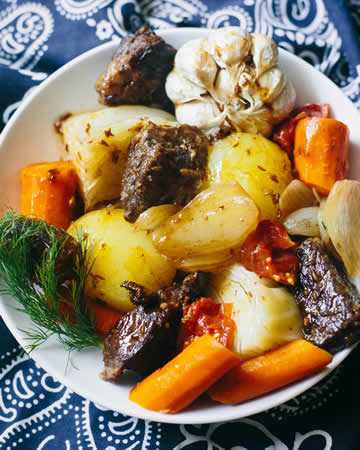 This delicious stew dish is very popular across Central Asia (especially Uzbekistan and Kyrgyzstan) and in other former Soviet countries. In all languages that belong to the Turkic language group, the word dimdama (or its variations dimlama, dymadama, demdeme, etc.) translate to the verb boil. This is an exact description of this stew. The dish first appears in Central Asia at the territory of today's Uzbekistan in the Middle Ages. Dimlama is a traditional Uzbek dish that's especially popular during the annual harvest time (spring and summer) when you can find an abundance of vegetables in Uzbekistan and most other countries in the region. The most important thing when preparing a dimlama is the layering. Dimlama is a one-pot dish (prepared in utensils with thick walls like a kazan, deep pan with a lid, or Soviet multicooker known as multivarka) but there's a special technique in preparing it. The first layer should consist of fried onions and meat (before you start boiling), and all other vegetables should be layered atop the lamb/beef/veal without stirring the pot. The final layer should consist of cabbage as this makes the flavour more savoury. From here on, it's simple; after you arrange the layers, just let the stew boil for 1½-2 hours. You don't have to stir throughout the process. Traditionally, dimlama is served in a large bowl with a big spoon and eaten with different kinds of bread (tandy Nan, lepyoshka, or patyr Nan). Preparing this dish is relatively simple: grab all the vegetables you have available, and layer them over meat (usually lamb, but sometimes beef or horsemeat), cover and simmer until everything is tender. No need to add water - the vegetables will release their own liquid. And it turns out that this dish is actually a bit of a revelation to cook, because it really brings awareness to the vegetables’ subtle flavors. Plus this meat-to-veggies ratio makes the rare chunks of meat that much more pleasurable.
2 lbs lamb shoulder, boneless or beef chuck roast, cut into 2” pieces
1 tsp. kosher salt
½ tsp. black pepper, freshly ground
2 Tbsp. ghee or butter
1 ½ tsp. cumin seeds
1 large onion, quartered
1 lb Yukon gold potatoes, about 2" in diameter, peeled
3 large carrots (about ½ lb), peeled and cut into large chunks
1 whole head garlic, outer skins removed (all but skins around individual cloves)
2 sprigs dill
2 roma tomatoes, cut into wedges
1 small head cabbage (about 1 lb), outer leaves removed and reserved, cut into 2" pieces
Garnish:
fresh dill
Combine the meat, salt, and pepper. Warm the ghee in a Dutch oven or stockpot over medium-high heat, then add the meat and brown until darkened and crispy, about 3 minutes per side, in batches as needed to prevent overcrowding; set the meat aside as it finishes browning.
Reduce heat to medium, then add the cumin seeds. Sauté until aromatic, about 30 seconds, then return the meat and any accumulated juices to the pot. In layers, add the onion, potatoes, carrots, dill, garlic, tomatoes, and cabbage chunks, then cover everything with the reserved outer cabbage leaves. Once you hear sounds of bubbling, cover the dutch oven and reduce heat to medium-low; simmer until the cabbage is tender throughout, about 1 hour and 15 minutes.
Remove the dutch oven from heat, then discard the outer cabbage leaves and carefully transfer each layer onto a platter; loosely cover with aluminum foil and set aside. Increase the heat to medium-high and reduce any leftover liquid until it is mostly oil, about 5 minutes. Distribute the meat and vegetables into four bowls, then pour the sauce over each bowl.
Serve garnished with dill.
Makes 4 servings.